INDEXED BY


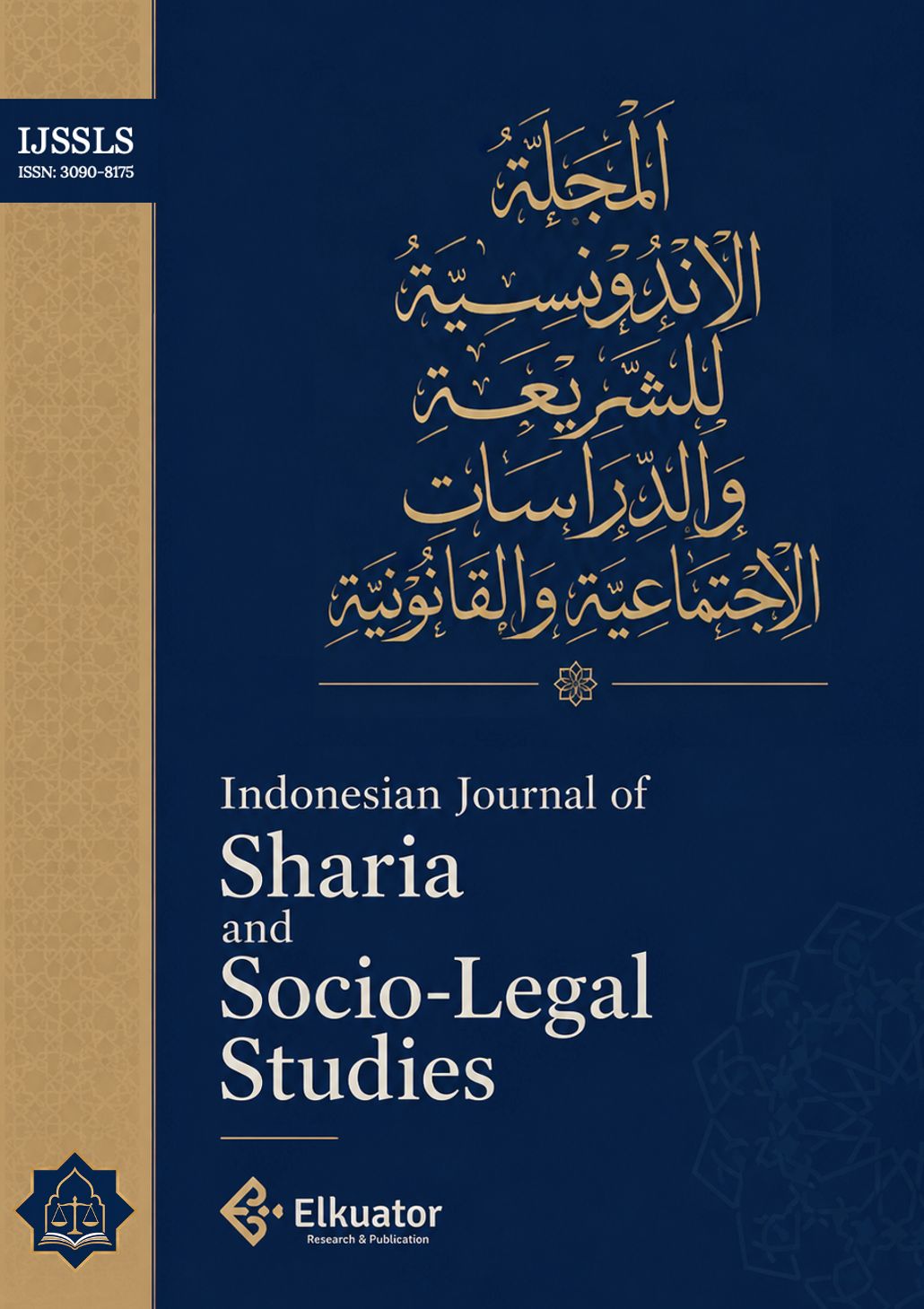
Journal Initials: IJSSLS
e-ISSN: 3090-8175
DOI Prefix: 10.66277 by 
Publisher: Elkuator Research and Publication
Frequency: Biannual (May and November)
Publishing Mode: Open Access
Editor-in-Chief: Muhammad Lutfi Hakim
Citation Analysis: Scopus | DOAJ | Google Scholar | Dimensions
Indonesian Journal of Sharia and Socio-Legal Studies (IJSSLS) is a peer-reviewed academic journal published and managed by Elkuator Research and Publication. The journal is produced in academic collaboration with IAIN Pontianak and Perkumpulan Dosen Hukum Keluarga Islam (PDHKI) Indonesia, which support its scholarly activities but do not hold ownership or publishing rights. This collaboration reflects a shared commitment to advancing original, high-quality research on the dynamic relationship between Islamic law and society in Indonesia and other Muslim-majority countries. The journal promotes socio-legal and interdisciplinary scholarship that critically examines how Islamic law is interpreted, practiced, institutionalized, and negotiated within diverse social, cultural, political, and legal contexts.
IJSSLS employs a rigorous double-blind peer-review process to ensure the academic quality, relevance, and scholarly contribution of each submission. It adheres to open-access principles to facilitate the broad dissemination of knowledge and promote scholarly exchange within both national and international academic communities. The journal welcomes contributions from scholars and practitioners employing socio-legal, empirical, and interdisciplinary approaches, with particular attention to living fiqh (Islamic jurisprudence) and everyday legal practices; Islamic law and legal pluralism; Islamic institutions, governance, and authority; gender, family, and legal inequality; legal consciousness and dispute resolution; as well as contemporary challenges and technologies shaping legal practices in Muslim societies.
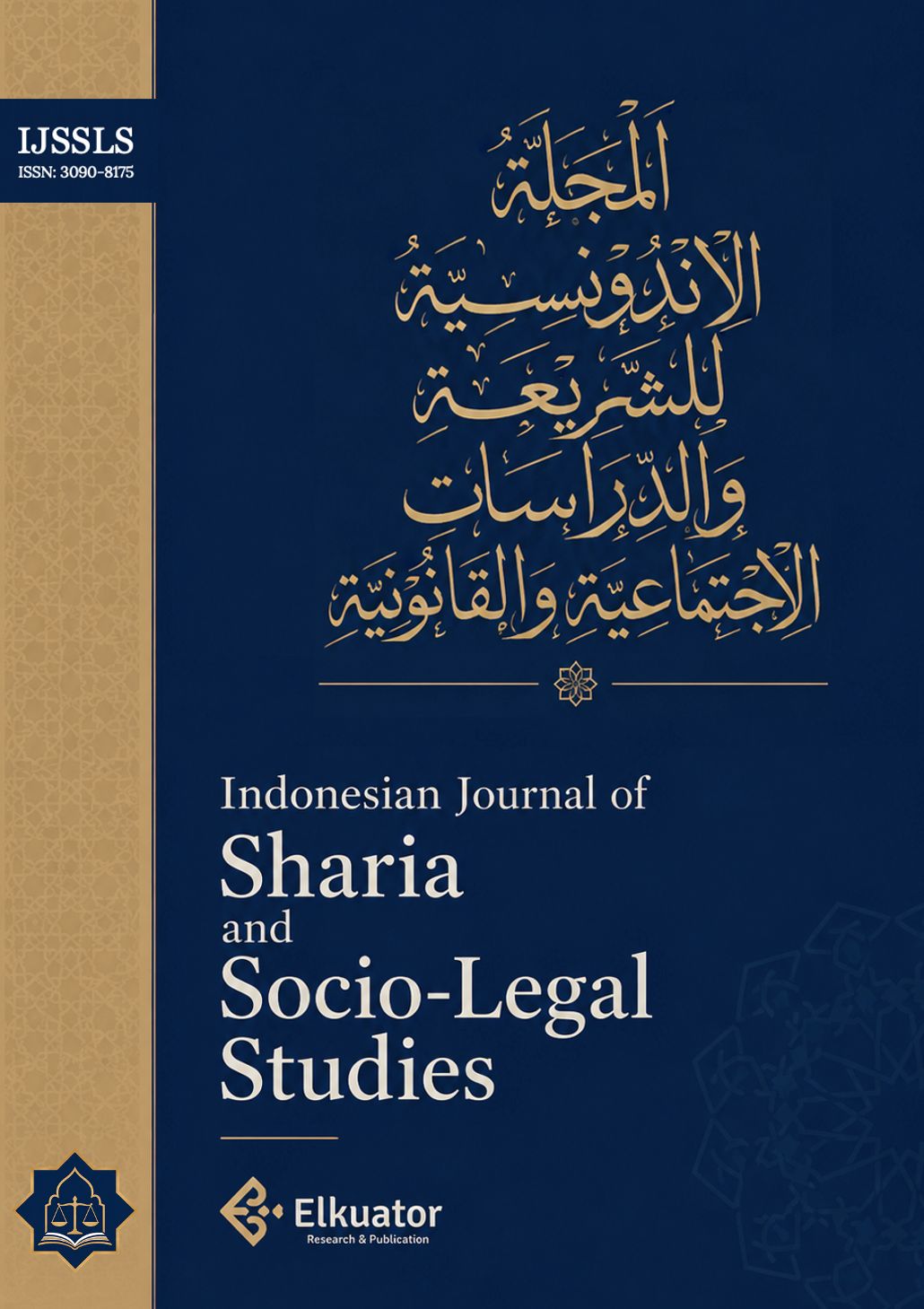
This issue has been available online since March 23, 2026, when its first article was published, with subsequent articles published progressively as part of the regular issue for May 2026. It features five original research articles authored or co-authored by nine scholars from three countries: Egypt, Germany, and Indonesia.


 Abstract View: 499,
  PDF (English) Download: 720
Abstract View: 380, PDF (English) Download: 574
Abstract View: 486, PDF (English) Download: 282
Abstract View: 573, PDF (English) Download: 231
Abstract View: 429, PDF (English) Download: 341
PDF (English) Download: 720
Abstract View: 380, PDF (English) Download: 574
Abstract View: 486, PDF (English) Download: 282
Abstract View: 573, PDF (English) Download: 231
Abstract View: 429, PDF (English) Download: 341