INDEXED BY


The Editor-in-Chief conducts an initial assessment to determine whether a submitted manuscript aligns with the aims and scope of the Indonesian Journal of Sharia and Socio-Legal Studies. Manuscripts deemed suitable are forwarded to the Managing Editor for further processing, including verification of compliance with the journal’s maximum similarity threshold.
Manuscripts that pass the initial screening are assigned to a handling editor. Each manuscript is evaluated by at least two independent reviewers appointed by the editor. All manuscripts that pass the initial editorial screening undergo a double-blind peer review process, in which the identities of both authors and reviewers are concealed from each other to ensure impartiality, academic rigor, and ethical integrity. Only manuscripts that receive favorable evaluations from qualified reviewers and meet the journal’s editorial standards are considered for publication.
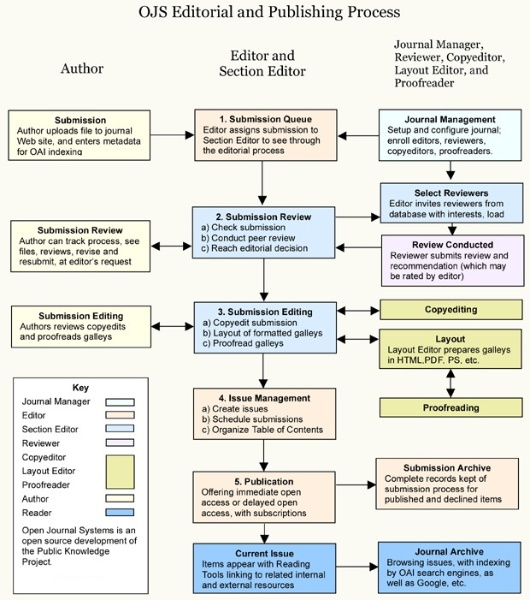
The Indonesian Journal of Sharia and Socio-Legal Studies upholds rigorous double-blind peer review standards while maintaining an efficient and transparent editorial process. The primary stages of this process are outlined below.
The journal employs a two-stage evaluation process, beginning with an initial editorial screening followed by an external peer review. After a technical and administrative assessment, each submission undergoes an editorial evaluation to determine its relevance, originality, and suitability for the journal. Manuscripts that meet these criteria are assigned to a handling editor for further assessment. Those that fall outside the journal’s scope or fail to meet its minimum editorial standards may be rejected at this stage without external peer review (desk rejection). However, research manuscripts cannot be accepted for publication without completing the required peer-review process.
For manuscripts that align with the journal’s scope and editorial standards, the handling editor identifies and invites at least two reviewers with expertise relevant to the subject matter. Reviewers are selected based on their academic qualifications, independence, and absence of conflicts of interest. Since peer review is a voluntary academic service, the process may take additional time. Nevertheless, editors actively monitor its progress to ensure timely evaluations. During this stage, the manuscript is designated as "Under Review."
Once the required number of review reports has been received, the manuscript status is updated to "Required Reviews Complete." The handling editor evaluates the reviewers' reports and determines whether the manuscript should be accepted, revised, or rejected. Authors are then informed of the editorial decision and, if revisions are necessary, are provided with the reviewers' comments and recommendations.
Following resubmission, the handling editor evaluates whether the revised manuscript adequately addresses the reviewers’ comments and recommendations. If necessary, the manuscript may be returned to the authors for further revision or rejected if it does not meet the journal’s academic standards. Additionally, revised manuscripts may be sent back to the original reviewers or assigned to additional independent reviewers for further expert assessment when warranted.
For manuscripts referred from supporting journals, existing peer review reports and editorial assessments may be considered, provided their authenticity, relevance, and compliance with the journal’s peer review standards can be verified. Such manuscripts remain subject to the journal’s initial editorial screening and double-blind peer review process. Previous reviews do not automatically qualify a manuscript for acceptance.
Where necessary, the handling editor appoints additional independent reviewers to ensure that the manuscript undergoes a sufficiently rigorous and impartial evaluation. Final editorial decisions remain the responsibility of the journal’s editors, and authors are informed accordingly.
Steps 1–5 cover the initial submission, screening, and peer review stages. If revisions are required, the process continues with resubmission and further evaluation by editors or reviewers until a final decision is made.
Based on the reviewers’ reports and the journal’s editorial standards, the handling editor may issue one of the following decisions:
Decisions regarding the acceptance, revision, or rejection of manuscripts are made by the handling editor based on reviewers’ reports and recommendations, as well as the journal’s academic and ethical standards. Final acceptance is granted only after the required peer review process has been completed and the manuscript meets the journal’s publication criteria. When reviewers provide conflicting recommendations or further expert assessment is necessary, the handling editor may invite an additional independent reviewer or initiate another round of peer review before making a final decision.
The Editor-in-Chief determines the publication schedule and the order of accepted manuscripts, considering their acceptance dates and the journal’s publication arrangements. On average, the entire process from submission to publication takes approximately 12 weeks.
In accordance with the journal’s publication ethics, all manuscripts under review are treated as confidential throughout the editorial and peer review processes. Unpublished manuscripts and related review materials must not be disclosed or used for purposes unrelated to the editorial evaluation without proper authorization.